
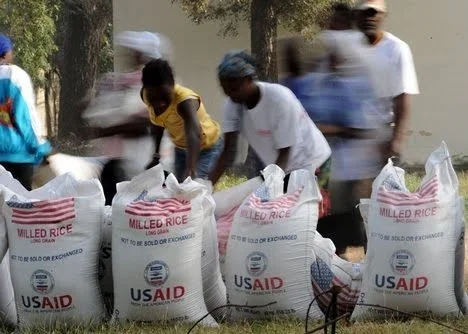
In 2025, President Trump cancelled $5 billion in foreign aid and international organization funding [1]. This has led to a funding crisis across the humanitarian sphere, leaving many African countries to their own devices without a phased transition [2]. After losing half their food aid, Malawi has seen an increase in human trafficking and sexual violence due to a lack of stability [3]. In Somalia, only 600,000, out of 6.5 million people facing food insecurity, are receiving assistance [4]. But nations are only just beginning to feel the consequences, as these cuts are projected to lead to millions of deaths by 2030 [5]. The reduction of foreign aid has revealed the dangerously low state capacity of African nations and the reliance these countries have on foreign aid, while indicating that these states have not developed the capacity to sustain basic services independently [6]. Without strong institutions, African states cannot absorb this shock alone, making the question of how to build sustainable state capacity urgent.
On one extreme, Jeffrey Herbst argues that war will actually improve African state capacity, citing European development trends [7]. Herbst’s historical observations and assertion that African states suffer from weak capacity are credible [8].However, Herbst underestimates how the African Union’s border norms foreclose conquest as a state-building tool, making his prescription unfeasible [9]. But he is not entirely wrong. I propose to use conditional aid to replicate the selection mechanism by rewarding states that invest in tax systems, public administration, and service delivery while withholding funds from those that do not. One example of conditional aid is the Millennium Challenge Corporation (MCC) model.
Unlike traditional humanitarian aid, the MCC model incentivizes reform by rewarding positive performance, reducing dependency, and encouraging sound policies [10]. There have been various successes in Africa using the MCC model. Cote d’Ivoire’s state capacity, for example, significantly increased through policy reforms that allowed the country to qualify for the MCC, as well as the institutional investments made during its compact [11]. Despite originally failing 15 of the 20 indicators, the government undertook reforms to better meet the criteria, and, in 2017, successfully secured a $536.7 million compact [12]. Since then, the nation has increased their state capacity, as shown by a 6% average annual GDP increase [13]. Cote d’Ivoire’s trajectory demonstrates that the reform pressures that lead to MCC eligibility can be as beneficial as the funding itself.
A key part of state capacity is the ability to manage long-term goals. In Cote d’Ivoire, the Abidjan Transport Project rehabilitated roads; facilitating more commerce and trade. The project ensured long-term success by investing in the systems used to fund and manage the national road network. To sustain these improvements, the state partnered with universities to establish a master’s program in infrastructure management, where graduates would have a secured job maintaining these roads. Cote d’Ivoire also invested in its human capital by building 40 lower-secondary schools, as well as 2 teacher training campuses to ensure the schools are adequately staffed [14]. This example demonstrates that conditioned aid addresses not only the current issue but also how to sustain it.
Critics might argue that, unlike war, which was the “great stimulus to state-building” in Europe, aid does not pose a “major threat” to the state’s existence [15]. Conditioned aid from donors like the International Monetary Fund (IMF) cannot replicate existential danger [16]. The current international system, in his view, preserves "permanently weak states” that survive in a “crippled form” only because of international aid m[17]. In essence, aid is the dialysis for a terminally ill patient, and the citizens of developed nations are paying for it . However, the theoretical “solution” of letting states fail to force development is a humanitarian disaster. The 2025 USAID cuts have already had consequences, like those in Malawi and Somalia, and will only get worse [18]. Returning to Herbst’s historical norm of war is unacceptable in the modern era, as the human and economic costs would be higher than they were in pre-modern Europe. While institutions like the IMF are shown to impair state-building, the MCC model is different because it is a voluntary, performance-based partnership. The MCC only selects countries that have demonstrated the political will to govern effectively, ensuring that aid strengthens a state’s existing stability instead of undermining its authority.
Still, Herbst argues that the absence of war in Africa has resulted in “no development of nationalism,” leaving states as weak “quasi-states” [19]. On the contrary, Africans often are proud to be members of their nations, even when those nations are weak [20]. When given the option to change their citizenship to another, more stable nation, residents of Niger and Burkina Faso overwhelmingly refused to do so [21]. This suggests there are alternative paths to cohesion.
Why did war turn weak city-states into strong empires? Because it creates an urgent, unavoidable threat. States are forced to develop or fail. The 2025 aid cuts showed that many current African states will fail if we let them. The solution is not the elimination of aid or a return to the wars of days past. Instead, smarter, conditioned aid that replicates the selection pressures of war can develop capacity without the human costs of war. It is imperative that we work proactively to promote the international security and economic stability that will continue to allow our country to thrive. Giving aid to whoever asks (or does not ask) for it is futile, but if efforts are concentrated on those who are willing to put in the work, we can contribute to a more stable international community.
End Notes
[1] The White House. 2025. “Historic Pocket Rescission Package Eliminates Woke, Weaponized, and Wasteful Spending.” The White House.
[2] Da Silva, Andrea Ferreira. 2026. Impact of two decades of humanitarian and development assistance and the projected mortality consequences of current defunding to 2030: retrospective evaluation and forecasting analysis. The Lancet Global Health 2026. 1.
[3] Better World Campaign. 2025. “The Impact of Foreign Aid Cuts.” Better World Campaign.
[4] World Food Program. 2026. “Somalia.” World Food Program.
[5] Da Silva, Andrea Ferreira. 2026. Impact of two decades of humanitarian and development assistance and the projected mortality consequences of current defunding to 2030: retrospective evaluation and forecasting analysis. The Lancet Global Health 2026. 2.
[6] Burnside, Craig, and David Dollar. 2000. Aid, Policies, and Growth. The American Economic Review 90(4): 848.; Da Silva, Andrea Ferreira. 2026. Impact of two decades of humanitarian and development assistance and the projected mortality consequences of current defunding to 2030: retrospective evaluation and forecasting analysis. The Lancet Global Health 2026. 3; Mene, Wamkele. 2020. “The african continental free trade area (afcfta): boosting intra-africa trade.” Georgetown Journal of International Law. 51(4):751.; Ndlovu, Dominee B. 2022. Readiness for the AfCFTA by Member States’ Domestic Tax Policies. Afronomics Law 164:3.
[7] Herbst, Jeffrey. 1990. War and the State in Africa. International Security 14(4):119.
[8] Herbst, Jeffrey. 1990. War and the State in Africa. International Security 14(4):119-125, 132.; Newman, David. 2003. On borders and power: A theoretical framework. Journal of Borderlands Studies 18(1):14.
[9] African Union. 2024. "The African Continental Free Trade Area." African Union.
[10] Millennium Challenge Corporation. 2026. “About MCC.” Millennium Challenge Corporation.; Davies, Joanne E. 2018. “Does the Millennium Challenge Corporation Reinforce Capitalist Power Structures or Empower Citizens?” Third World Quarterly 39(4): 610.
[11] World Bank. 2026. “GDP Increase (current US$) Cote d'Ivoire.” World Bank.
[12] Davies, Joanne E. 2018. “Does the Millennium Challenge Corporation Reinforce Capitalist Power Structures or Empower Citizens?” Third World Quarterly 39(4): 612-14.
[13] World Bank. 2026. “GDP Increase (current US$) Cote d'Ivoire.” World Bank.
[14] Millennium Challenge Corporation. 2026. “Côte d’Ivoire.” Millennium Challenge Corporation.
[15] Herbst, Jeffrey. 1990. War and the State in Africa. International Security 14(4):117.
[16] Herbst, Jeffrey. 1990. War and the State in Africa. International Security 14(4):133.
[17] Herbst, Jeffrey. 1990. War and the State in Africa. International Security 14(4):137.
[18] Better World Campaign. 2025. “The Impact of Foreign Aid Cuts.” Better World Campaign.; World Food Program. 2026.; Da Silva, Andrea Ferreira. 2026. Impact of two decades of humanitarian and development assistance and the projected mortality consequences of current defunding to 2030: retrospective evaluation and forecasting analysis. The Lancet Global Health 2026. 0:1
[19] Herbst, Jeffrey. 1990. War and the State in Africa. International Security 14(4):118.; Trautsch, Jasper M. 2019. Civic Nationalisms in Global Perspective. Routledge Studies in Modern History. London and New York 6.; Thies, Cameron G. 2007. “The Political Economy of State Building in Sub-Saharan Africa.” The Journal of Politics 69(3):717.
[20] Bhandari, Abhit, and Lisa Mueller. 2019. “Nation-state of nation-family? Nationalism in marginalised African societies.” Journal of Modern African Societies 57(2):299.
[21] Bhandari, Abhit, and Lisa Mueller. 2019. “Nation-state of nation-family? Nationalism in marginalised African societies.” Journal of Modern African Societies 57(2):306.
Image Courtesy of USA Rice Federation