
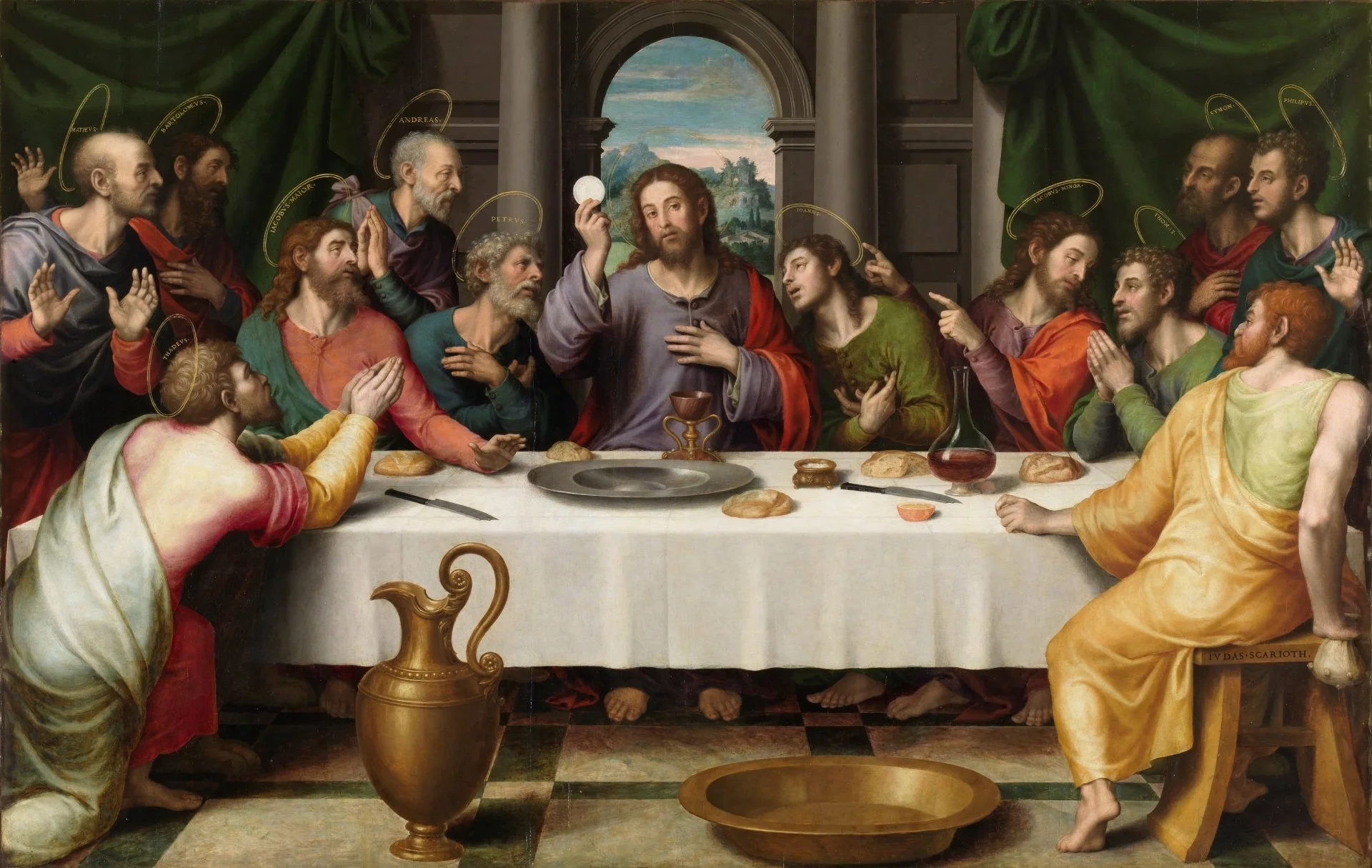
The American Catholic novelist Flannery O’Connor famously said on the Eucharist, “If it’s just a symbol, to hell with it.” O’Connor’s language may be stark, but necessarily frank to demonstrate the gravity of the Host. From the inception of the Church, the affirmation of the Real Presence was rooted in Christ's own words. In the Bread of Life discourse, Jesus says, “I am the living bread that came down from heaven; whoever eats this bread will live forever; and the bread that I will give is my flesh for the life of the world" (John 6:51). This is very clearly Jesus talking about how His flesh is the bread from Heaven, reaffirming the Real Presence of Him in the Eucharist. But not everyone immediately believed, questioning Jesus’s meaning in saying that they had to eat Him; “the Jews quarreled among themselves, saying, ‘How can this man give us [his] flesh to eat?’” (John 6:52). But Jesus, after the doubt of the people about eating His flesh, doubled down. “Jesus said to them, ‘Amen, amen, I say to you, unless you eat the flesh of the Son of Man and drink his blood, you do not have life within you’” (John 6:53). Jesus also emphasizes the importance of the Eucharist, saying, “Whoever eats my flesh and drinks my blood has eternal life, and I will raise him on the last day” (John 6:54). Jesus in the original Greek also changes the word He uses for eat after He stresses his point. When He originally commands them to eat, He used the word phago, which simply means “to eat” in Greek, but the second time He shifts to trōgon, which means “to literally gnaw or chew,” emphasizing the importance of physically eating Him in the Eucharist.
Even after all of that, there were still those who did not believe in what Jesus said and did not believe when He said that you had to eat His flesh to have eternal life. Those people said “This saying is hard; who can accept it?” (John 6:60). Jesus responds by saying, “Does this shock you? What if you were to see the Son of Man ascending to where he was before? It is the spirit that gives life, the flesh is of no avail; the words that I have spoken to you are spirit and life.” (John 6:61-63). Notice Jesus does not say “my flesh” is of no avail He says “the flesh” is of no avail [1]. Jesus also says He “Knew from the beginning the ones who would not believe and the one who would betray him” (John 6:64), saying also “For this reason I have told you that no one can come to me unless it is granted him by my Father” (John 6:65). Subsequently, many disciples left Jesus because of this teaching. “As a result of this, many [of] his disciples returned to their former way of life and no longer accompanied him” (John 6:66). Many disciples left Jesus because of His teaching on the Eucharist as shown above, but Jesus did not change His teaching. He doubles down, stressing the literal truth of His teaching on eating His flesh; even saying you have no life in you unless you eat His flesh and drink His blood in John 6:53. The Gospel of St. John demonstrates and emphasizes the literal nature and significance of eating and drinking the real flesh and blood of our Lord and Savior, Jesus Christ. The Eucharist is truly “the source and summit of Christian life” (CCC 1324).
End Notes:
[1] Broussard, Karlo. 2019. “Why Communion If Flesh Is of No Avail?” Catholic Answers. https://www.catholic.com/qa/why-communion-if-flesh-is-of-no-avail.